
I once found myself in the middle of a tangled mess of tall grass, clutching a string trimmer in one hand and questioning the life choices that had led me there. The infernal racket from that machine drowned out even my own thoughts, leaving me with nothing but the incessant buzz of modern convenience. Maybe I’m just a glutton for punishment, but after fifteen minutes, I was ready to trade that weed wacker for a scythe and a pair of earplugs. There’s something oddly poetic about wielding a tool that feels like it belongs in a museum or a medieval battlefield. At least with a scythe, I could hear myself think.
Stick with me, and we’ll dig into the nitty-gritty of why I turned my back on that screeching beast. I’ll lay out what I learned about these tools of the trade, from the tranquility of the scythe’s sweeping arc to the manic energy of the string trimmer. We’ll talk tradition versus technology, quiet versus chaos, and how these choices shape our land management philosophies. No fluff, just the raw, unvarnished truth about cutting through the chaos—literally and metaphorically.
Table of Contents
When The Grass Is Taller Than Your Ego: Scythe vs. Weed Wacker Showdown
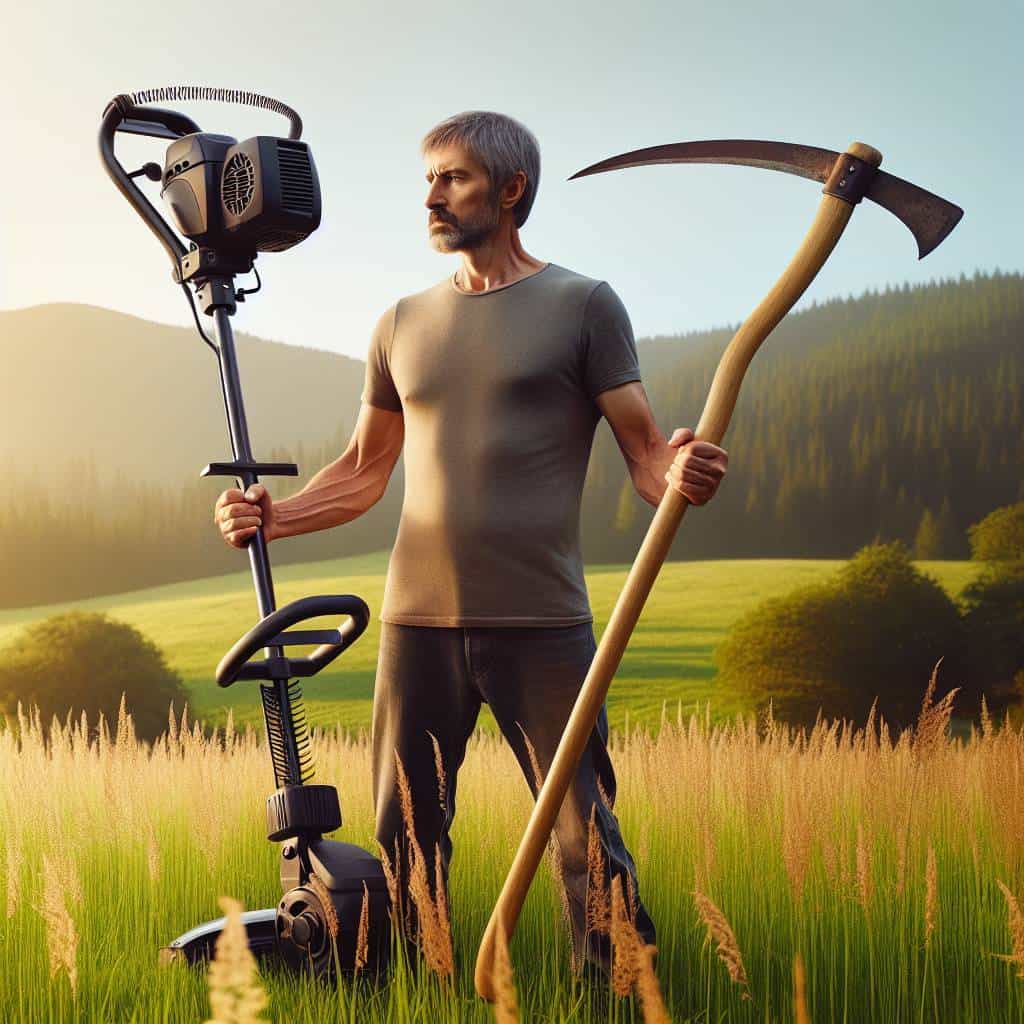
When faced with a sea of unruly grass that seems to tower over your very sense of self, you’ve got a choice to make. The scythe, that ancient crescent of steel, offers a dance—a quiet, meditative sway as you cut through the green jungle. With a scythe, you’re not just managing your land; you’re engaging in a tradition as old as farming itself. There’s no roaring engine, no gas fumes. Just you, the tool, and the rhythmic cadence of your own effort. It’s about taking control, one sweeping motion at a time, letting the silence wrap around you like a well-worn cloak.
Contrast that with the weed wacker, the modern soldier in the battle against overgrown landscapes. Sure, it’s efficient. It tears through tall grass with a relentless buzz, a kind of mechanical fury that leaves no blade standing. But it’s loud. It’s intrusive. It turns the simple act of cutting grass into a war zone. The weed wacker demands fuel, maintenance, and an acceptance of the chaotic symphony it conducts. Yet, for those who prioritize speed over serenity, it’s a necessary evil—a tool that gets the job done when you’re more interested in results than the journey.
So, you stand at the crossroads of tradition and technology, weighing silence against the roar, simplicity against speed. Do you embrace the calm precision of a scythe, or do you surrender to the chaotic efficiency of a weed wacker? It’s a showdown for the ages, each tool vying for a spot in your arsenal. The decision is yours. Choose wisely, and may your grass be ever in your favor.
The Symphony of Silence
In the dance of tradition and technology, the scythe speaks in whispers while the string trimmer bellows its demands. Choose your partner wisely.
The Quiet Triumph of Tradition
Standing in the field, scythe in hand, I find a sense of connection that’s hard to articulate. It’s more than nostalgia. It’s this quiet rebellion against the drone of modernity, a nod to the wisdom of the land and its patience. Each swing is a conversation with the past, where every blade of grass cut feels purposeful, deliberate. The scythe demands attention, presence, and in return offers a meditative silence that machinery can’t replicate.
This journey through the tall grass has been less about choosing sides and more about rediscovering values. In a world that screams for speed and efficiency, the scythe reminds me of the beauty in the deliberate act, the grace in simplicity. And while the string trimmer may have its place, I’ve found mine in the rhythmic, quiet dance of steel against grass. It’s not about what’s better; it’s about what resonates with the soul. And for me, the scythe whispers truths the weed wacker will never know.