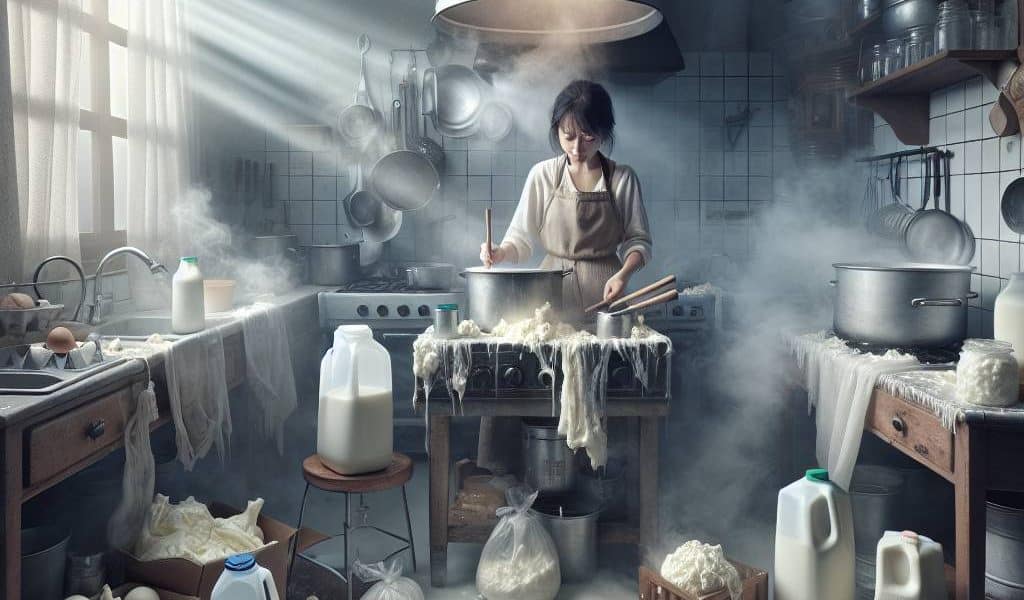

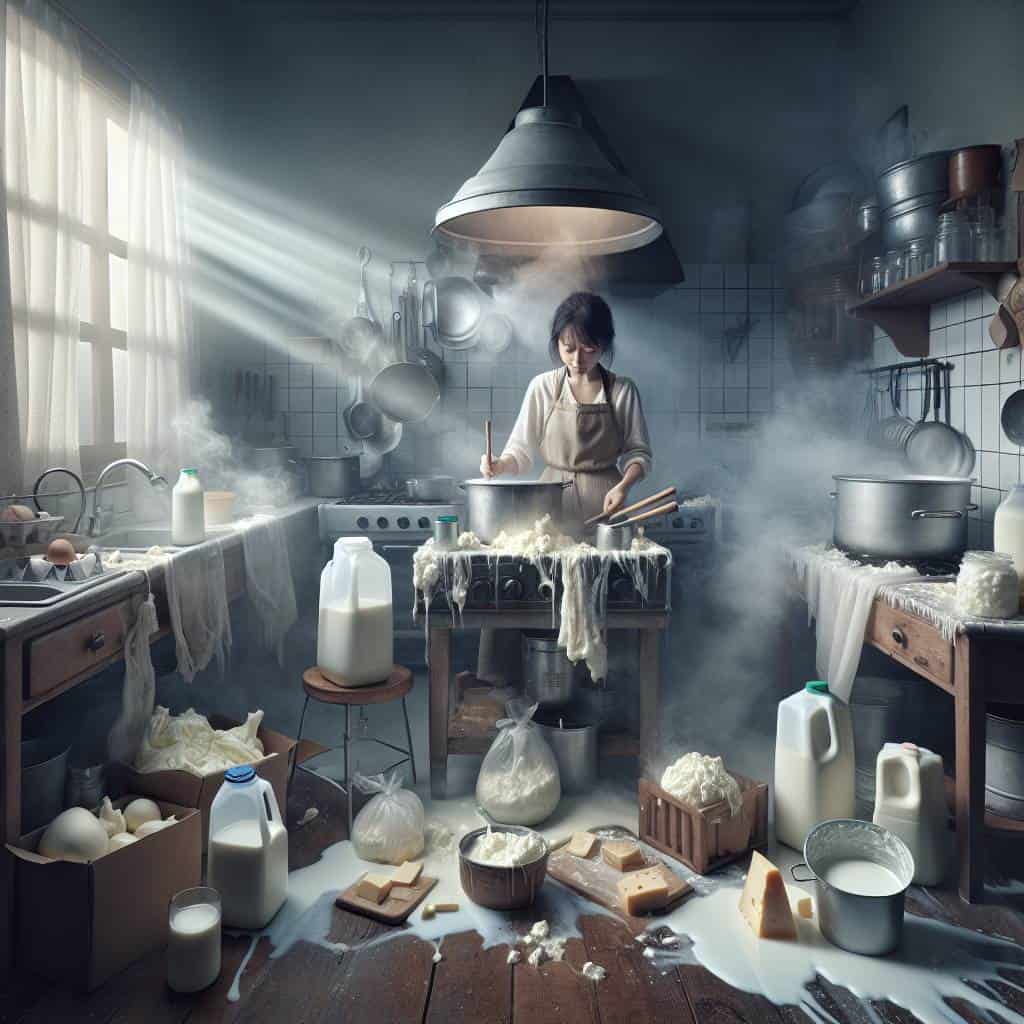
So there I was, knee-deep in milk and existential dread, attempting to make cheese at home for the first time. Spoiler alert: it wasn’t the pastoral, Instagram-worthy experience I’d envisioned. Instead, my kitchen resembled a dairy-themed crime scene, complete with suspicious splatters and a faint smell of regret. My first lesson in cheesemaking? It isn’t for the faint of heart—or those with a sensitive nose. But alas, in the spirit of conquering the absurd, I soldiered on, armed with a colander and an unwavering belief that this was somehow a good idea.
Now, dear reader, you’re about to embark on your own cheese-coated adventure. And fear not, for I’ve waded through the whey (pun intended), so you don’t have to. In this article, we’ll navigate the treacherous waters of curds and whey, starting with the simple pleasures of ricotta and the stretchy allure of mozzarella. I promise to arm you with the basics, plus a few hard-earned tips to ensure your first foray into cheesemaking doesn’t end in tears—or worse, cheese that could moonlight as a doorstop.
Table of Contents
When Life Gives You Milk, Make Mozzarella: A Tale of Cheesemaking Basics
Picture this: you’ve got a gallon of milk staring back at you from the fridge, and you’re feeling adventurous. Why not turn that milk into mozzarella? Yes, the same mozzarella you use to top your Friday night pizza. Cheesemaking is a bit like alchemy—minus the philosopher’s stone and plus a whole lot of patience. It starts with milk, rennet, and citric acid. These three amigos come together in a culinary tango that will either leave you with a beautiful ball of cheese or a questionable science project. But that’s the thrill of it. You heat the milk, add a dash of citric acid to curdle it, then introduce the rennet to get that coagulation party started. The curds form, you cut them lovingly, and then it’s all about the stretching. Think of it as a dairy yoga session.
Before you know it, you’re elbow-deep in the curds, and there’s no turning back. This is where mozzarella demands your full attention. Knead, stretch, and pull until you’ve got a smooth, elastic ball of cheesy goodness. Sure, you might be wondering if you could have just bought a pack from the store. But where’s the fun in that? Mozzarella making is about embracing the messy, unpredictable, and occasionally smelly reality of creating something from scratch. And once you’ve tasted your homemade mozzarella—still warm and with a texture that melts like a dream—you’ll know it was worth every moment of chaos. Plus, you can smugly tell people at your next dinner party that you made it yourself. Just don’t mention the gallon of milk you spilled on the floor along the way.
The Ricotta Revelation
Embark on your cheese-making journey not for the perfect mozzarella, but for the chaos of curds and the simple joy of realizing that sometimes, the mess is the masterpiece.
Milky Epiphanies and Kitchen Catastrophes
In the end, my foray into the world of cheesemaking felt a bit like trying to tame a wild beast with nothing but a spoon and some optimism. Ricotta, that simple darling, was my gateway—its recipe a deceptive little minx that lured me in with promises of ease. Who knew that curdling milk could become a philosophical exercise in patience and resilience? Each batch brought a new lesson, mostly about how not to do it, but that’s just part of the charm, isn’t it?
Mozzarella was the grand finale in this dairy saga. A test of both my sanity and my willingness to embrace chaos. As my kitchen transformed into a scene from a culinary horror film, I realized cheesemaking is less about the cheese and more about confronting your fear of failure. So, if you’ve got some milk and a penchant for messy adventure, dive in. Because, in the end, life’s too short to be afraid of a little curd.